Food Suppliers for UAE Restaurants — 2026 Wholesale Directory
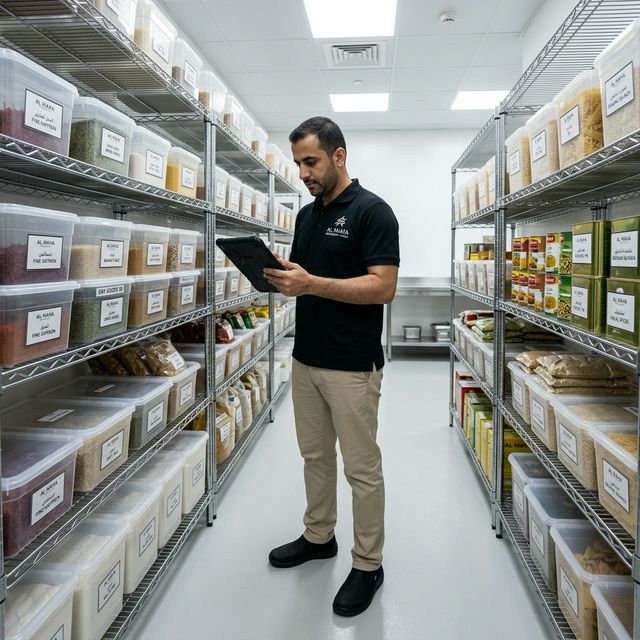
UAE restaurants source from three overlapping supply lanes: broad-line foodservice distributors, category specialists (meat, seafood, produce, dairy), and local producers and wholesale markets. The UAE foodservice market is valued at USD 27.28 billion in 2026 (Mordor Intelligence) — and most independent operators run with 15–30 active suppliers to serve a single kitchen. This guide is the working map: who plays in each lane, what they actually carry, and what to verify before you sign.
Procurement is the second-largest cost line in any UAE restaurant after rent — and it is the only one a kitchen can directly control week to week. The supplier mix you build determines food cost percentage, menu flexibility, delivery reliability, and the audit trail you can show a Dubai Municipality inspector. Below we walk through each category, name the suppliers Dubai operators actually buy from, and finish with the practical question of how to manage 20–40 vendor relationships without losing margin to manual chaos.
In this guide
- UAE foodservice supply at a glance
- Broad-line foodservice distributors
- Meat & poultry suppliers
- Seafood suppliers and the Waterfront Market
- Fresh produce: importers and local farms
- Dairy, eggs and local poultry
- Compliance: FoodWatch, halal, traceability
- Managing 20–40 suppliers without losing margin
- FAQ
UAE foodservice supply at a glance
The UAE foodservice market reached USD 27.28 billion in 2026 and is forecast to grow at a 17.55% CAGR to USD 61.21 billion by 2031 (Mordor Intelligence). HoReCa accounts for 57.82% of the meat distribution channel by volume — restaurants, hotels and cafes are where most food in the country actually moves. Some 74% of UAE consumers eat out at least weekly, the highest dining-out frequency in the world.
For a working kitchen, that scale translates into supplier choice. The market has matured into three distinct lanes:
- Broad-line distributors — Bidfood, Admirals Trading, and similar — carry thousands of SKUs across proteins, dairy, dry goods, oils and beverages. One account, one weekly order, most of the long tail covered.
- Category specialists — Asmak for seafood, Kibsons for produce, Al Ain Farms for dairy, Aramtec for premium meat. Better depth, freshness, and pricing inside their lane.
- Local producers and wholesale markets — Emirates Bio Farm, the Waterfront Market in Deira, Al Ain Farms Group brands. Used for freshness stories, short-shelf items, and provenance-led menus.
Most independent restaurants combine all three: a broad-line account anchors the order book, four to eight category specialists handle the high-value SKUs, and a market or local-farm relationship covers the items that need to be in the kitchen the morning they were caught or harvested.
Broad-line foodservice distributors
Broad-line distributors are the workhorses. They exist to compress procurement complexity into a single account — useful when the alternative is managing 30 separate phone calls every Tuesday afternoon.
Bidfood Middle East
bidfoodme.com — Bidfood is the largest dedicated foodservice distributor in the UAE. It started life in 2003 as Horeca Trade, joined the global Bidcorp family in 2005, and rebranded as Bidfood Middle East in 2019. The Dubai distribution centre is in DIP 2; the wider Middle East operation runs across UAE, KSA, Oman and Bahrain. Their Bidfresh fresh-produce category — launched in 2025 — covers seafood, meat, poultry, and fruit and vegetables, sitting alongside the established protein, dairy, sauces, oils, pasta, rice and seasonings range. The myBidfood platform, introduced in 2021 as the region's first dedicated foodservice e-distribution system, lets restaurants order online or via mobile, view price history, and track deliveries.
Admirals Trading
admirals.ae — A multi-disciplined HoReCa distributor with two decades in the UAE market, operating from Jebel Ali Industrial Area 1 and Al Quoz 3. The portfolio covers around 4,000 SKUs across 60 international brands, supplying hotels, restaurants, QSRs, contract caterers, airlines and amusement parks. The in-house meat division (Admirals Meat Processing) employs full-time butchers cutting to HoReCa specifications, which is useful for kitchens that want consolidated supply across both proteins and broader grocery.
JM Foods Gulf
jmfoodgulf.com — Established in 1996, JM Foods Gulf operates a temperature-controlled warehouse in Dubai Investment Park 2 and supplies a client list weighted toward the hotel sector — Jumeirah, Marriott, Hilton, Hyatt and Rotana among them. The catalogue spans 70-plus branded lines: Wagyu and Black Angus beef, Australian grass-fed lamb (Top Paddock), Dutch milk-fed veal (Peter's Farm), game and a clearly-segmented pork range for hotel non-halal outlets. Best-fit for fine dining and hotel F&B teams that work supplier-to-chef through an account manager.
When a broad-line account stops being enough
Single-account convenience holds up until the menu raises the standard. Once a kitchen wants line-caught Spanish hake, micro-greens twice a week, or a specific wagyu marbling grade, the broad-line catalogue runs out — and category specialists come in.
Meat & poultry suppliers
Meat is the largest single procurement line for most UAE restaurants. The country imports more than 90% of its meat, drawing primarily from Australia, Brazil, India, New Zealand and the United States, and HoReCa accounts for 57.82% of the country's meat distribution by volume (Mordor Intelligence). The wholesale market splits cleanly into volume distributors (commodity cuts at competitive pricing) and premium importers (provenance-specific cuts for steakhouses and hotel F&B).
For a category-deep walkthrough — including supplier-by-supplier sourcing origins, contact details, and how to evaluate halal certification — see our companion article:
→ Top Meat & Poultry Suppliers for Restaurants in Dubai — 2026 List
The short version for this directory: Bidfood, Al Kabeer, Al Islami Foods, Taiba Farms, and Ever Green Food Service handle the volume end; Aramtec / Butchershop.ae, JM Foods Gulf, and Country Hill International handle the premium end. All meat sold in Dubai must carry valid halal certification under UAE.S 993:2015, regulated by ESMA and audited at the restaurant level by Dubai Municipality.
Seafood suppliers and the Waterfront Market
UAE restaurants buy seafood through three channels: the Waterfront Market in Deira, dedicated wholesale seafood specialists, and the seafood lines inside broad-line distributors.
Waterfront Market (Deira)
waterfrontmarket.ae — Opened in 2017 as the replacement for the old Deira Fish Market, the Waterfront Market is the largest fresh food market in Dubai. It covers roughly 120,000 sq ft on the Deira Corniche and houses around 800 traders moving an estimated 800 tonnes of fresh produce daily. The live fish auction runs nightly from 11pm to 6am — restaurants and major hospitality buyers (including Emirates Airlines catering) source through it directly. For a kitchen running a daily-changing fish menu, the market is the closest thing in the UAE to a French or Spanish lonja: fresh species off the dhow, priced live, in a few hours.
Asmak
asmak.me — Asmak operates one of the UAE's most technologically advanced seafood facilities at Saih Shuaib in Dubai Industrial City, with temperature-controlled warehousing and a growing aquaculture network using Recirculating Aquaculture Systems. The product range covers fresh, frozen, breaded and ready-to-cook lines across MENA and international markets. Suited to operations that want consistent year-round supply of farmed species and a documented cold-chain.
Aramtec Blue Seafood
aramtecblue.com — The dedicated foodservice seafood arm of Aramtec, supplying restaurants, hotels and catering operations alongside the parent brand's premium meat division. A useful single-supplier solution for venues that already source meat from Aramtec and want consolidated invoicing.
SAFCO International
safcointl.com — A long-standing seafood distributor and supplier across the UAE and the wider Middle East, carrying premium chilled and frozen lines for foodservice.
The Deep Seafood Company
thedeepseafood.com — Wholesale seafood importer and exporter operating across the UAE and Middle East. Lists product range across pelagic fish, shellfish, cephalopods and value-added items.
Golden Dunes
golden-dunes.com — Dubai-based importer and supplier of chilled and frozen seafood, distributing across the UAE and GCC.
Two-channel seafood sourcing
Most Dubai seafood-led restaurants run a hybrid: market-sourced fresh fish each morning for the daily catch board, plus a wholesale account with a specialist (Asmak, SAFCO, The Deep Seafood) for predictable menu items where consistency matters more than provenance — salmon portions, tuna loins, prawns, calamari rings.
Fresh produce: importers and local farms
Fresh fruit and vegetables are the most volatile line in the procurement book — prices change daily, quality is supplier-by-supplier, and short shelf life means waste hits margin fast. UAE supply splits between large-volume importers operating out of Aweer Central Fruit & Vegetable Market in Dubai and smaller-scale local farms growing under controlled conditions.
Kibsons International
kibsons.com — Kibsons has been operating since 1980 and is ISO certified. Headquartered at Wholesale Building 2 in Aweer's Central Fruit & Vegetable Market, the company imports a continuously expanding range of fresh fruit and vegetables by air, sea and land. Their HoReCa client list includes restaurants, hotels, in-flight caterers, ship chandlers and bakeries, and they offer customised processing contracts (cleaned, cut, packed) for foodservice clients. Same-day delivery across the UAE.
Emirates Bio Farm
emiratesbiofarm.com — Founded in 2016 in Al Shuwaib, Al Ain, Emirates Bio Farm is the UAE's largest privately-owned organic farm. The operation grows over 60 crop varieties, all certified organic, and operates a 24-hour harvest-to-delivery cycle with free shipping above AED 200. The farm also runs the on-site Farmer's Table restaurant, demonstrating the freshness model directly. For Dubai restaurants building a farm-to-table or local-organic menu story, Emirates Bio Farm is the most credible primary source.
Floral Fruit LLC
floralfruitllc.com — A Dubai-based wholesale supplier of fruit and vegetables for restaurants, hotels and catering operators across the UAE.
Beyond named importers, the Aweer Central Fruit & Vegetable Market itself is the city's primary wholesale produce hub. Many restaurants assign a member of the team to walk the market early in the week to spot price movements and quality variances that aren't visible on a price list.
Dairy, eggs and local poultry
Unlike meat and produce, a meaningful share of the UAE's dairy and eggs comes from local production. The two anchor groups are Al Ain Farms Group and the National Food Products Company (NFPC).
Al Ain Farms Group
alainfarms.com — Al Ain Farms was founded in 1981 as the UAE's first dairy company, established under Sheikh Zayed bin Sultan Al Nahyan. In May 2025, parent Yas Holding consolidated five iconic local brands into the Al Ain Farms Group: Al Ain Farms (fresh and camel milk, juices, eggs, poultry), Marmum Dairy, Al Ajban Chicken, Al Jazira Poultry Farm's Golden Eggs, and Saha Arabian Farms. For restaurant procurement teams, the consolidation means one supplier relationship can cover fresh milk, yoghurt, laban, cheese, eggs and chicken — all UAE-produced, with traceability back to local farms.
National Food Products Company (NFPC)
nfpc.net — NFPC supplies more than 50% of the UAE population through a portfolio that includes Lacnor (long-life and fresh dairy and juices), Milco Dairy, Gulf & Safa, Laban Up, Oasis and Blu mineral waters. Restaurant accounts typically use NFPC for long-life UHT milk and juice ranges where shelf stability matters more than fresh-line freshness.
Imported specialty dairy — French butters, Italian mozzarella di bufala, Greek feta, aged cheddars — comes through broad-line distributors (Bidfood, Admirals) or through dedicated specialty importers depending on the restaurant's volume.
Compliance: FoodWatch, halal, traceability
Three regulatory baselines apply to every supplier-restaurant relationship in Dubai. They are not optional, and inspectors will check each one.
FoodWatch registration. All food establishments in Dubai are required to register on Dubai Municipality's FoodWatch platform — the city's online food-safety registration and traceability system. Suppliers feeding into restaurants must themselves hold the appropriate trade licence and DM food permit for their activity (importer, distributor, central kitchen, processing facility).
Halal certification. All meat and poultry sold in Dubai must carry valid halal certification under UAE.S 993:2015, regulated by the Emirates Authority for Standardization and Metrology (ESMA). Restaurants are responsible for verifying the certificate at the supplier level — the certificate number, issuing body, and expiry date — and re-verifying at renewal.
Country-of-origin and cold-chain documentation. Imported proteins and produce must clear UAE customs with origin certificates. Cold-chain integrity (0–4°C for fresh, below –18°C for frozen) is the supplier's responsibility on delivery, and the restaurant's responsibility once accepted. A delivery note signed without temperature verification is an audit risk.
Documentation lapses are a routine inspection finding
The most common DM inspection findings tied to suppliers are: expired halal certificates on file, missing temperature logs at goods-receipt, and unregistered suppliers in FoodWatch. Build a 30-day-before-expiry calendar reminder into your supplier registry, and require the temperature log on every delivery note.
Managing 20–40 suppliers without losing margin
Once a kitchen is sourcing across three or four categories, the operational problem stops being "find the right supplier" and becomes "manage the relationships." Most independent UAE restaurants run with 15–30 active suppliers; once dairy, coffee, branded oils, beverages and specialty dry goods are split out, the count climbs to 30–50.
Three practices materially reduce the friction:
1. Centralise the supplier registry. Every active supplier should sit in one record with: trade licence number, halal/organic certificate copies (with expiry dates), agreed price catalogue per SKU, payment terms (net 30, COD, etc.), delivery cutoff times, and account-manager contact. WhatsApp threads and Excel files don't survive staff changes — a system record does.
2. Trigger ordering from stock data, not memory. Define a par level for each ingredient (e.g. always maintain 15 kg chicken breast in cold store). When stock falls below par, a draft purchase order should be generated automatically, grouped by supplier, ready for the chef or purchasing manager to review and send. This eliminates the "did we order tomatoes?" question and cuts both stockouts and over-ordering.
3. Match goods-receipt against the PO. Count and weigh deliveries against the original PO at the receiving door — not at month-end. Shortfalls, substitutions, price discrepancies and quality rejections must be recorded immediately. Restaurants without this discipline routinely lose 1–3% of food cost to silent invoice errors that compound over the year.
Frequently asked questions
How many food suppliers does an average UAE restaurant work with?
Most independent UAE restaurants run with 15–30 active suppliers across all categories. Casual and fine dining operations often climb to 30–50 once specialty dairy, branded coffee, branded oils, and dry goods are split out. Multi-outlet groups consolidate where possible to negotiate volume pricing, but full single-vendor sourcing is rare — no UAE distributor stocks every category at the price-quality combination a kitchen needs.
Do all food suppliers in Dubai need to be registered with Dubai Municipality?
Suppliers operating food-trade activities in Dubai must hold a valid trade licence and the relevant Dubai Municipality food permit for their activity (importer, distributor, central kitchen, etc.). Restaurants must register on FoodWatch, the DM online food-safety platform, and source from licensed suppliers traceable through the system. Verify the supplier's trade licence and any product-specific certificates (halal, organic, country of origin) before opening an account.
Where do UAE restaurants buy fresh seafood wholesale?
Three practical channels: (1) the Waterfront Market in Deira — the city's primary wholesale fish market with around 800 traders moving roughly 800 tonnes of fresh produce daily; (2) specialist seafood wholesalers such as Asmak, Aramtec Blue, SAFCO and The Deep Seafood Company, which deliver across the UAE and offer chilled, frozen, breaded and ready-to-cook lines; (3) broad-line distributors such as Bidfood, which carry seafood in their Bidfresh fresh-produce category.
Are local UAE produce farms a viable supply option for restaurants?
Yes — local sourcing is growing. Emirates Bio Farm in Al Shuwaib (Al Ain), the UAE's largest privately-owned organic farm, grows over 60 crop varieties and supplies restaurants and the on-site Farmer's Table kitchen. The Al Ain Farms Group, consolidated in May 2025, supplies fresh dairy, camel milk, eggs and poultry from UAE production. Local sourcing works best for short-shelf-life items where freshness is a menu story; imported produce still dominates for volume, range and seasonal continuity.
What is the difference between a broad-line distributor and a category specialist?
Broad-line distributors (Bidfood, Admirals Trading) carry thousands of SKUs across proteins, dairy, dry goods, oils, sauces and beverages — designed so a kitchen can place one order and receive most of its ingredients. Category specialists (Asmak for seafood, Kibsons for produce, Al Ain Farms for dairy, Aramtec for premium meat) focus on one category and typically offer better depth, freshness, and pricing inside that lane. Most Dubai restaurants combine both: a broad-line account for the long tail of ingredients and four to eight specialists for the high-value categories.
How can a restaurant manage purchase orders across 20–30 suppliers?
Centralise three things: a single supplier registry with agreed prices and contacts, par-level driven ordering so each PO is triggered by stock data rather than memory, and goods-receipt matching at delivery so shortfalls and substitutions are recorded against the original PO. Restaurants that run this in WhatsApp threads and spreadsheets typically lose 1–3% of food cost to invoice errors, double-deliveries, and missed credits. Procurement software (such as HoreX Procurement) consolidates these flows into one record per supplier.
Sources
- Mordor Intelligence — UAE Foodservice Market Size & Forecast 2026–2031
- Mordor Intelligence — UAE Edible Meat Market 2026: HoReCa distribution share
- Bidfood Middle East — About Bidfood: Horeca Trade founding (2003), Bidfresh launch (2025), myBidfood platform (2021)
- Waterfront Market Dubai — Official site: trader count, market structure, daily auction
- Asmak — UAE seafood facility, Saih Shuaib (Dubai Industrial City), aquaculture program
- Kibsons — Company history, ISO certification, HoReCa supply program
- Emirates Bio Farm — Founding, organic certification, 60+ crop varieties, 24-hour harvest cycle
- Yas Holding — Al Ain Farms Group launch (May 2025): 5 consolidated brands
- Dubai Municipality — FoodWatch: food-establishment registration and traceability platform
- ESMA — UAE Halal Standard UAE.S 993:2015