Recipe Cost Card Template: Fields, Sub-Recipes, and Batch Scaling
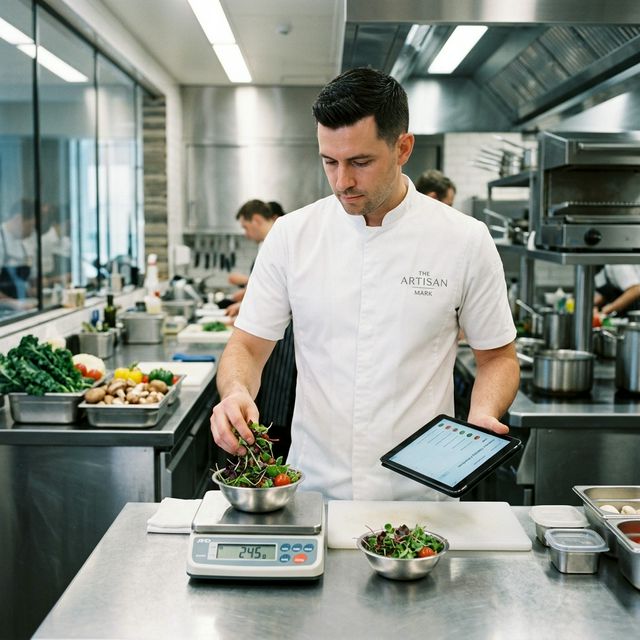
Food cost percentage is a scoreboard. The recipe cost card is the scorecard behind it — the per-dish document that tells you whether the number is telling the truth. Dubai's 8,617 restaurants and 5,240 coffee shops compete on margins where a systematic yield error on one high-volume ingredient can cost AED 2,000 a month in invisible food spend. Most kitchens get the math right but build the wrong document: no sub-recipe links, no batch version, prices nobody updates. This guide is about the template that fixes all three.
What follows is a field-by-field walkthrough of the recipe cost card template: what each column does, how sub-recipes (sauces, stocks, marinades, doughs) fit into the structure, when to use a batch card versus a portion card, and a full worked example — a shawarma plate with the garlic sauce costed as its own nested sub-recipe.
In this guide
- What the card actually is (not a cooking instruction)
- The eight fields every recipe cost card needs
- Cold loss vs hot loss — costing cooked proteins correctly
- Sub-recipes: sauces, stocks, and marinades as nested cards
- Batch card vs portion card
- Worked example: shawarma plate with garlic sauce sub-recipe
- Multi-branch recipe standardization
- Keeping the template current
- FAQ
What the card actually is (not a cooking instruction)
A recipe card on a laminated sheet tells a cook how to make a dish. A recipe cost card is a financial document that tells management what the dish should cost to produce — and flags when reality drifts from that number.
The difference matters in how you design it. A cooking card optimizes for readability in a hot kitchen. A cost card optimizes for precision at every quantity: it must track what you buy (as-purchased, brutto), not just what you serve (edible portion, netto), because you pay for what you buy — including the parts you throw away in prep.
A properly built cost card answers three questions for every dish:
- How much of each ingredient must I order to produce the correct portion?
- What is the true cost of this dish, accounting for all prep losses?
- If I sell it at this price, what margin does it actually deliver?
Those three questions cannot be answered accurately by a recipe card that records only edible-portion weights and ignores what gets trimmed off, peeled away, or lost to cooking shrinkage.
The eight fields every recipe cost card needs
There is no universally standard recipe cost card format, but every template that works in a production kitchen contains at least these eight columns. Columns 1–4 define what you need; columns 5–7 calculate the cost; column 8 tracks the card's own maintenance history.
| # | Field | What to enter | Why it matters |
|---|---|---|---|
| 1 | Ingredient / Component | Full specification: "Chicken fillet, chilled, Halal" — not "chicken" | Prevents ambiguity when you have multiple chicken SKUs in the system |
| 2 | EP Qty (netto) | What ends up in the dish after all prep — in grams, ml, or pieces | This is what the chef thinks about when writing the recipe |
| 3 | Cold yield % | Usable weight after trimming ÷ raw weight × 100 | Converts EP to pre-cook AP; run a yield test to establish this number |
| 4 | AP Qty (brutto) | EP Qty ÷ (Cold yield % ÷ 100) — what procurement must order | The number that drives inventory and purchasing, not the EP number |
| 5 | Unit | g, kg, ml, L, piece, portion | Must match the price column; inconsistency causes the most spreadsheet errors |
| 6 | Price per unit | Weighted average cost (WAC) from latest supplier invoices | Last-purchase price produces cost swings; WAC is more stable and accurate |
| 7 | Line cost | AP Qty × Price per unit — calculated automatically | The cell most often wrong: people multiply EP qty × price and skip the yield |
| 8 | Notes / Last reviewed | Supplier code, date of last yield test, seasonal flag | Tells you when the card was last verified against a real purchase |
Below the ingredient rows: a Total recipe cost row (sum of all line costs), a Menu price field, and a Food cost % cell (Total ÷ Menu price × 100). Those three lines are what management reads; everything above is what makes them accurate.
Cold loss vs hot loss — costing cooked proteins correctly
Yield percentage covers cold loss: weight removed from a raw ingredient by trimming, peeling, boning, or portioning before it touches heat. But proteins also lose weight during cooking — this is hot loss, and it must be built into the AP quantity calculation for any dish where the served portion weight is specified.
The two factors compound. The formula is:
Cold yield fraction = Cold yield % ÷ 100
Hot yield fraction = Hot yield % ÷ 100
A practical example for a bone-in chicken thigh served at 130g:
- Cold yield: 78% (removing bone and excess fat)
- Hot yield: 72% (roasting at 200°C, 25 min)
- Combined: 0.78 × 0.72 = 0.562
- AP Qty = 130g ÷ 0.562 = 231g purchased weight per portion
Without hot loss, you would have calculated AP Qty at 130g ÷ 0.78 = 167g — a 38% undercount in what you actually order and pay for. This undercount shows up as mysterious variance in your actual vs theoretical food cost reports.
When it does not apply: Uncooked or cold components (salads, raw garnishes), sauces measured post-cook, ingredients where the cooking happens inside the dish (stews, curries) and the final weight is irrelevant.
Sub-recipes: sauces, stocks, and marinades as nested cards
The recipe cost card breaks down when sauces, marinades, or other prepared components are entered as a single line item with an estimated cost. In a kitchen that makes its own garlic sauce, the garlic sauce appears in 12 different dishes. If you cost it differently in each dish, or just estimate "AED 0.60 per portion," two things go wrong: costs are inaccurate, and when the garlic price changes you have to find and update all 12 cards manually.
The correct structure is a sub-recipe (also called a semi-finished product or prep recipe): a cost card for the sauce or stock on its own, producing a cost per 100g or per litre. That unit cost then appears as a single line in every dish that uses it.
How to build a sub-recipe card
A sub-recipe card follows the same eight-field structure as a finished recipe card, but its output is not a selling portion — it is a batch of prepared product. The header of the sub-recipe card specifies:
- Batch yield: how much finished product the recipe produces (e.g., 2,000ml of garlic sauce)
- Batch cost: sum of all ingredient costs for that batch
- Unit cost: Batch cost ÷ Batch yield (e.g., AED 22 per litre = AED 2.20 per 100g)
In the finished recipe card, the garlic sauce line reads: "Garlic sauce (sub-recipe) — 30g — AED 2.20/100g — AED 0.66." The sub-recipe card is the source of truth; all finished recipe cards pull from it. When you change the garlic sauce formula or the price of garlic changes, you update one card and all 12 dishes recost automatically.
Common sub-recipes in UAE restaurant kitchens: garlic sauce (toum), tahini, shawarma marinade, hummus, tabbouleh base, stock (chicken, beef, fish), pizza dough, bread dough, pastry cream, tomato base.
Batch card vs portion card
Most recipe management guides describe a single recipe card per dish. In practice, a working kitchen needs two versions of the same card:
| Portion card | Batch card | |
|---|---|---|
| Purpose | Costing and menu pricing | Kitchen production and prep planning |
| Quantity | 1 serving | N servings (defined by kitchen batch size) |
| Used by | F&B manager, GM, accountant | Sous chef, prep cook, kitchen lead |
| Price field | Current selling price, food cost % | Not shown (not relevant on the production floor) |
| Format | Spreadsheet row or system record | Printed card or screen, with large quantities |
A batch card is simply the portion card multiplied by the batch size (e.g., 40 portions). They must be linked: if you update portion sizes or ingredient yields in the portion card, the batch card must reflect the change. Maintaining two separate documents that can diverge is a common source of portioning error and food cost drift.
Worked example: shawarma plate with garlic sauce sub-recipe
The following example builds two linked cards: first the garlic sauce sub-recipe, then the finished shawarma plate that references it. Dubai wholesale ingredient prices are based on Numbeo retail data (April 2026) with a 20% wholesale discount applied.
Sub-Recipe: Garlic Sauce (Toum) — Batch of 1,000g
Batch size: 1,000g finished sauce. For use in shawarma plates, mixed grills, and wraps.
| Ingredient | EP (netto) | Yield % | AP (brutto) | Price/kg | Cost |
|---|---|---|---|---|---|
| Garlic, fresh | 200g | 88% | 227g | AED 16/kg | AED 3.63 |
| Sunflower oil | 600ml | 100% | 600ml | AED 12/L | AED 7.20 |
| Lemon juice, fresh | 120ml | 80% | 150ml | AED 8/L | AED 1.20 |
| Salt | 10g | 100% | 10g | AED 3/kg | AED 0.03 |
| Ice water | 70ml | 100% | 70ml | AED 0 | AED 0.00 |
| Batch total | AED 12.06 |
Batch yield: 1,000g | Cost per 100g: AED 12.06 ÷ 10 = AED 1.21/100g
This unit cost (AED 1.21 per 100g) feeds directly into any recipe that uses garlic sauce. If garlic prices rise, update one card; all 12 dishes using toum recost automatically.
Finished Recipe: Chicken Shawarma Plate — 1 Portion
Portion size: 1 serving. Garlic sauce costed from sub-recipe above.
| Ingredient / Component | EP (netto) | Yield % | AP (brutto) | Price/kg or pc | Cost |
|---|---|---|---|---|---|
| Chicken fillet, chilled, Halal | 200g | 91% | 220g | AED 19/kg † | AED 4.18 |
| Shawarma marinade (sub-recipe) | 15g | 100% | 15g | AED 0.90/100g ‡ | AED 0.14 |
| Arabic pita bread | 1 pc | 100% | 1 pc | AED 0.75/pc | AED 0.75 |
| Tomatoes, fresh | 90g | 90% | 100g | AED 5/kg § | AED 0.50 |
| Onions, white | 80g | 85% | 94g | AED 3.67/kg § | AED 0.35 |
| Garlic sauce / toum (sub-recipe) | 30g | 100% | 30g | AED 1.21/100g | AED 0.36 |
| Cooking oil | 8ml | 100% | 8ml | AED 12/L | AED 0.10 |
| Pickle, sliced (bought-in) | 20g | 100% | 20g | AED 14/kg | AED 0.28 |
| Total | AED 6.66 |
† Indicative restaurant wholesale rate; Numbeo retail range AED 15–55/kg (April 2026).
‡ Illustrative shawarma marinade sub-recipe cost (spices, oil, lemon); update with your own card.
§ Numbeo verified retail price, Dubai (April 2026); restaurant wholesale typically 15–20% lower.
Menu price: AED 24 | Food cost %: AED 6.66 ÷ AED 24 × 100 = 27.8%
Notice how the garlic sauce line cost (AED 0.36) is lower than a rough estimate of "AED 0.65 for sauce" might have been, but it is accurate — and when the garlic price changes, only the sub-recipe card needs updating. The shawarma card recalculates from it.
Multi-branch recipe standardization
When a restaurant group runs three or five branches in Dubai, the instinct is to give each kitchen a copy of the recipe spreadsheet. This produces three or five diverging versions within three months: one branch updates the chicken price, another does not; someone changes the marinade on branch 2 but not branch 1. By quarter-end, theoretical costs calculated from the spreadsheets and actual costs from the P&L do not agree, and no one can say which card is current.
The principle is: one recipe card, many price lists. The card's structure — ingredient specifications, EP quantities, yield percentages — is the same across branches. What changes per branch is the ingredient cost, which depends on which supplier serves that location.
This architecture means:
- A change to portion size or yield is made once and propagates to all branches immediately
- A price change at the Sharjah branch supplier does not pollute the Dubai cost card
- Management can compare theoretical food cost by branch on the same recipe structure
- Training new kitchen staff uses one source of truth, not branch-specific variants
Keeping the template current
A recipe cost card that was accurate in January is almost certainly wrong by April. Three things change without warning:
Supplier prices. UAE imports the majority of its food supply; exchange rate movements and shipping disruptions can shift wholesale prices 5–15% within a quarter. A dish costed at 29% food cost in Q1 can drift to 34% by Q3 if chicken, onion, or cooking oil prices move and no one updates the card. The only reliable solution is to link recipe costs to live invoice prices — either by manually updating on every new purchase order, or by using inventory software that does it automatically via Weighted Average Cost (WAC).
Yield percentages. A yield test run when the restaurant opened reflects the quality of the supplier at that time. If you switch chicken suppliers, or tomato quality deteriorates in summer humidity, your yield % changes. Cards that have not been yield-tested in the past six months should be treated as estimates, not actuals. Assign a "last yield test" date to each ingredient and flag any that are more than three months stale.
Sub-recipe formulas. When a chef adjusts the garlic sauce recipe — more lemon, less oil — the sub-recipe card must be updated. If it is not, every dish that references it carries a wrong cost. The practical fix: mark sub-recipe cards as requiring chef sign-off before and after any formula change, and log changes with a date.
Frequently asked questions
What is the difference between a recipe cost card and a food cost report?
A recipe cost card is a per-dish document: it lists every ingredient with yield percentages and AP quantities, and calculates the cost of one serving. A food cost report is a period-level metric: it compares total food spend against total revenue for a week or month. The recipe card feeds into the report — if your cards are wrong (e.g., using EP quantities instead of AP), the report will always be off.
What is a sub-recipe in recipe costing?
A sub-recipe (also called a semi-finished product or prep recipe) is a prepared component that appears as a single line item in multiple finished recipes. Garlic sauce, shawarma marinade, stock, and dough are typical sub-recipes. You cost the sub-recipe once per batch, calculate a cost per 100g or litre, and reference that unit cost in every dish that uses it. This keeps your costs accurate even when the sub-recipe formula changes — update one card, all dishes recost.
Should a recipe cost card use portion quantities or batch quantities?
Both. A portion card (costed per one serving) is what you use for menu pricing and food cost % calculation. A batch card scales the same recipe to the production quantity your kitchen actually makes — for example, 50 portions or 10kg. Batch cards are used by prep staff; portion cards are used by management for costing and pricing. They must stay in sync: the batch card is simply the portion card multiplied by the batch size.
How do I handle an ingredient that is both trimmed and cooked?
Apply two yield factors sequentially. First, calculate cold loss (trimming, peeling): AP weight × cold yield % = pre-cook weight. Then apply hot loss (cooking shrinkage): pre-cook weight × hot yield % = served weight. For example, a chicken thigh at 91% cold yield and 70% hot yield needs: AP weight = served portion ÷ (0.91 × 0.70) = served portion ÷ 0.637. A 140g served portion requires purchasing 220g. Always cost on the AP weight.
How do I standardize recipes across multiple branches?
The recipe card itself must be branch-agnostic — portions and yield percentages do not change. What changes is the ingredient price, which varies by supplier and location. Systems that separate recipe structure from ingredient costs allow you to run one card against different branch price lists. This is why multi-branch restaurants use a central recipe management system rather than per-branch spreadsheets: the card is the same, but the cost engine updates by branch.
What is WAC and why does it matter for recipe costing?
WAC (Weighted Average Cost) is the average cost per unit of an ingredient calculated across all recent purchases, weighted by volume. If you buy chicken at AED 17/kg from Supplier A (100kg) and AED 22/kg from Supplier B (50kg), WAC = (100×17 + 50×22) ÷ 150 = AED 18.67/kg. Using last-purchase price instead causes recipe costs to swing with every invoice and misrepresent your true cost. Professional recipe management systems calculate WAC automatically on every new invoice posted.
Sources
- Pennsylvania State University, Introduction to Food Production and Service — Ch. 7: Recipe and Menu Costing — Yield %, loss factor, edible portion cost formulas; batch vs portion card methodology; industry food cost target range 28–35%
- Numbeo, Food Prices in Dubai — Verified retail ingredient prices: chicken fillets AED 30.96/kg, tomatoes AED 5.04/kg, onions AED 3.67/kg (April 2026)
- Dubai Department of Economy and Tourism, Dubai Gastronomy Industry Report 2024 — 8,617 restaurants and 5,240 coffee shops in Dubai (Dubai Municipality data); 1,200 new restaurants licensed in 2024
- Alpen Capital, GCC Food Industry Report 2025 — UAE food import dependency context; price volatility from exchange rate and shipping cost movements