Cloud Kitchen License Dubai — Costs & Steps for 2026
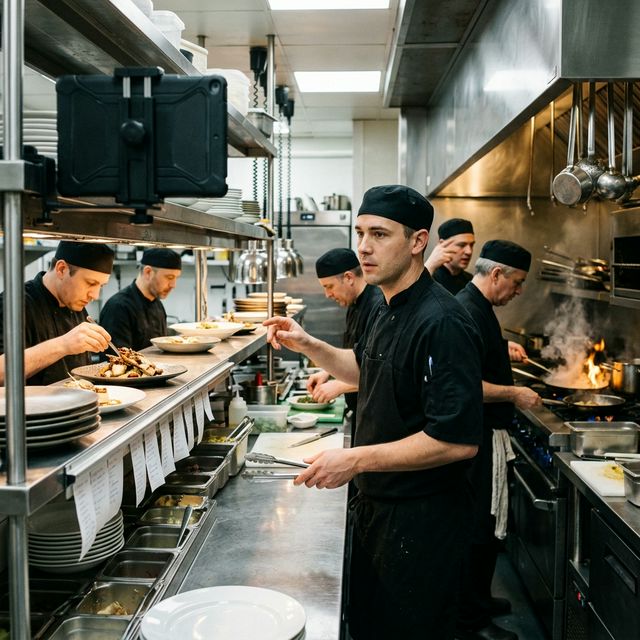
A cloud kitchen license in Dubai is three documents on top of a free DMChecked registration: a trade license from the Department of Economy and Tourism (DET) or a free zone authority, a Food Establishment Permit from Dubai Municipality (DM), and a Civil Defence fire-safety approval. Total government fees in 2026 run AED 17,000–45,000 on the mainland and start at AED 12,500/year via Meydan Free Zone, with kitchen rent and equipment on top. End-to-end setup is 4–6 weeks independent, or 2–4 weeks if you lease a pod from a shared operator like CloudKitchens, Kitopi or talabat Kitchens.
Cloud kitchens are no longer a workaround invented during the pandemic — they are a regulated category. Dubai Municipality treats a delivery-only kitchen exactly like any other food establishment: same Food Code 2.0, same inspections, same Person In Charge. What is different is the path to get there. There are now three viable ways to open one, and the cheapest is not always the best. This guide walks each path with the actual AED figures, the four documents you must produce, and the operational reality after the license is signed.
In this guide
What counts as a cloud kitchen in Dubai
In DM's language, a cloud kitchen is a food establishment without a dining area. It prepares meals for delivery and pickup only. The activity is filed on the trade license as "food preparation and delivery" or "restaurant without dine-in" — the wording differs by issuing authority, but the regulatory treatment is the same.
That treatment is set by the Dubai Food Code 2.0, the framework the Food Safety Department enforces across restaurants, cafes, catering, central kitchens and delivery operations. Inspections are now logged through DMChecked, the unified platform DM launched at the Dubai International Food Safety Conference 2025 to replace FoodWatch Connect.
The labels are marketing. Regulators see one category: a licensed food premises that prepares food for off-site consumption. A virtual brand that exists only on Talabat is still a registered establishment under a real DM permit — either yours, or your shared operator's.
The four documents you actually need
Every cloud kitchen in Dubai sits on the same regulatory stack, regardless of who issues the license. The four documents are sequential — each one unlocks the next.
- Trade license — issued by the Department of Economy and Tourism (DET) on the mainland or by a free zone authority. The activity must explicitly include food preparation and delivery.
- Food Establishment Permit — issued by Dubai Municipality's Food Safety Department. Requires an approved kitchen layout (ventilation, drainage, grease traps), an inspection visit, and a designated Person In Charge.
- Civil Defence approval — fire-safety inspection of the suppression hood, kitchen layout, and emergency exits.
- DMChecked registration — mandatory, free, completed online via the FoodWatch / DMChecked portal. Registers your supplier list, temperature logs and PIC for inspection.
If you go through a shared operator — CloudKitchens, Kitopi, talabat Kitchens — the operator already holds the DM permit, the Civil Defence sign-off and the DMChecked registration for the building. You still need your own trade license, but the kitchen-side documents are handled.
Mainland vs free zone — which path fits
The choice is less about price and more about who you can sell to. Mainland trade licenses let you serve every emirate directly and accept walk-in pickup. Free zone licenses are cheaper to start, but the activity is contractually limited to the zone — to reach mainland customers you generally need a distributor, an aggregator partnership, or to register an additional mainland branch.
For a delivery-only brand that lives entirely on Talabat, Deliveroo, Careem and Noon Food, the free zone route works. For a brand that might layer in catering, pickup or a hybrid dine-in model later, mainland is the safer foundation.
| Path | Annual license fee | Best for | Caveat |
|---|---|---|---|
| DET mainland | AED 10,000–30,000 | Brands that need direct-to-customer reach across all emirates | Higher rent in commercial zones; standalone DM permit required |
| Meydan Free Zone | From AED 12,500 (3 activities); AED 15,000 Fawri express | Delivery-only brands selling through aggregators | Mainland delivery typically routed via an aggregator partner |
| Shared kitchen | Operator-bundled (own license still required) | Speed-to-launch and lowest CapEx | You don't own the master DM permit — you operate under it |
Full cost breakdown in AED
The line items below are 2026 figures pulled from the issuing authority where possible (DET cost calculator, Meydan FZ published price list, DM permit schedule) and from current market rates for kitchen rent. Treat ranges as a planning envelope — the DET calculator gives the exact figure once your activity, area and legal form are entered.
| Cost item | Independent mainland | Meydan FZ | Shared pod |
|---|---|---|---|
| Trade license (annual) | AED 10,000–30,000 | AED 12,500–15,000 | AED 10,000–30,000 (mainland) or 12,500 (FZ) |
| DM Food Establishment Permit | AED 5,000–10,000 | AED 5,000–10,000 | Bundled (operator holds master permit) |
| Civil Defence approval | AED 2,000–5,000 | AED 2,000–5,000 | Bundled |
| DMChecked registration | Free | Free | Free |
| Kitchen rent (monthly) | AED 12,000–30,000+ (Al Quoz, Dubai Industrial City) | AED 8,000–25,000 (Meydan FZ pod) | From AED 8,000 (CloudKitchens, Kitopi) |
| Total Year-1 cash outlay (indicative) | AED 75,000–150,000 | AED 30,000–60,000 | ~USD 23,000 ≈ AED 84,000 (CloudKitchens published) |
All AED figures are 2026 ranges; the DET online calculator returns the exact license fee for your specific activity-and-area combination.
The shared-kitchen route
Three operators dominate the shared-kitchen segment in Dubai. Each one solves the regulatory and CapEx problem differently.
CloudKitchens (KitchenPark)
KitchenPark, the regional brand of CloudKitchens, operates 30+ facilities across the UAE, Saudi Arabia, Kuwait, Bahrain and Qatar. Pods are 16–25 sqm (versus ~200 sqm for a full restaurant), come with extraction, ventilation, gas points and sinks installed, and lease for a minimum of 12 months. The published headline startup cost is USD 23,000 with build-out in roughly two weeks.
Kitopi
Kitopi's homepage lists scale at 200+ locations across 12 cities and 7 countries, running 100+ brands with 6,000+ employees. Pricing is not publicly disclosed; commercial terms are negotiated per partner. Kitopi positions itself as a managed cloud-kitchen platform: kitchen plus operations, packaging, and white-label brand operations.
talabat Kitchens
talabat Kitchens reports 30+ hubs and 500+ kitchen stalls across the UAE, Kuwait, Qatar, Bahrain and Jordan, supporting 1,000+ restaurant partners. Country Lead Tarek El Halabi told Gulf Business the model targets "up to 90% cost savings compared to traditional restaurant openings" and reports 9% faster delivery times in the UAE versus brick-and-mortar fulfilment.
Announced 23 March 2026. Eligibility: UAE-established brand, 24+ months operational, 12+ months of delivery activity on any platform, and at least one physical UAE location. Managing director Simonida Subotic framed it as removing barriers for established homegrown brands to expand into more zones without rent risk.
Step-by-step launch timeline
Independent mainland setups land in the 4–8 week range when documents are complete on day one. Shared-kitchen pods compress this to 2–4 weeks because the operator already holds the master DM permit, Civil Defence sign-off and DMChecked registration for the premises.
- Week 1 — Trade license. Reserve trade name with DET (or chosen free zone). Submit memorandum of association and shareholder documents. Pay license fee. The Meydan Fawri product issues the license in under 60 minutes for AED 15,000 if you are taking the FZ route.
- Week 1–2 — Premises. Sign the lease (Ejari for mainland) or the shared-kitchen agreement. Get a tenancy contract that names food preparation as a permitted use.
- Week 2–4 — Kitchen approval. Submit kitchen layout drawings (ventilation, drainage, grease trap, hand-wash stations) to DM. Schedule the Food Establishment Permit inspection. In parallel, file the Civil Defence application — they need the same drawings plus your fire-suppression hood specs.
- Week 3–5 — DMChecked. Register the establishment, the Person In Charge (a food-handler-card holder), suppliers and storage temperatures. The portal expects evidence of food-safety training for the PIC.
- Week 4–6 — Platform onboarding. Submit your trade license and DM permit to Talabat, Deliveroo, Careem and Noon Food. Each platform has its own onboarding flow and takes 7–14 days to go live, so start in parallel with the kitchen build.
After the license — DMChecked, VAT, delivery contracts
The license is the easy part. Three things change the unit economics once you are open.
1. DMChecked is continuous, not one-off. The platform is mandatory and free, but it is also auditable. High-risk operations face quarterly inspections. Daily fridge and freezer temperature logs, supplier batch records and PIC sign-offs all live in DMChecked now.
2. VAT applies the same way as a dine-in restaurant. A 5% standard rate applies to food and non-alcoholic beverages. If your taxable supplies cross the AED 375,000 mandatory threshold (or AED 187,500 voluntary), you must register with the Federal Tax Authority and file every quarter. We covered the full mechanics in our restaurant VAT guide.
3. Delivery commissions decide your food-cost ceiling. Marketplace commissions in the UAE typically range 15–35% per order. The 2025 DCCPFT circular requires platforms to disclose commission rates transparently and give 30-day notice on contract changes — but it does not change the underlying economics. Our breakdown of Talabat, Deliveroo and Noon commission rates walks the math by basket size.
Paper temperature logs no longer count. If your team isn't recording fridge checks in DMChecked (or syncing them through an integrated system), you'll fail a no-notice inspection — DM is enforcing this against central kitchens explicitly. See our DM food safety guide for the full inspection checklist.
The tech stack a multi-brand kitchen needs
The first kitchen runs on tablets and patience. The second one breaks the spreadsheets. By the third brand or third location, the bottleneck is no longer the kitchen — it is everything around it.
A working multi-brand stack handles three things in one place:
- Unified order intake. Talabat, Deliveroo, Careem, Keeta and your own ordering channel all land on the same kitchen display, routed by brand and station, with one clear ticket per order. No more "which tablet is that order on?".
- Recipe-driven stock control. Every sale, from any channel, deducts ingredients automatically based on the recipe card. Without this, food cost is a monthly guess. With it, food cost is a live number per dish, per brand, per shift.
- Multi-brand P&L. Brand A and Brand B share the same kitchen, the same suppliers and the same cleaner — but they need separate revenue, separate food cost, and a real margin number. Otherwise you cannot tell which virtual brand is funding which.
If you run your own delivery in addition to the marketplaces, the courier side needs its own dispatch — a delivery app for restaurant couriers with live GPS, photo proof of delivery and shift-end cash reconciliation. Marketplaces alone leave a 15–35% commission on the table; an own-fleet channel for repeat customers can pay back inside a few months.
Frequently asked questions
How much does a cloud kitchen license in Dubai cost in 2026?
Government fees run AED 17,000–45,000 on the mainland — DET trade license AED 10,000–30,000, DM Food Establishment Permit AED 5,000–10,000, Civil Defence approval AED 2,000–5,000. Via Meydan Free Zone the published license starts at AED 12,500/year and bundles up to three activities. Kitchen rent is on top: AED 8,000–25,000/month for a Meydan FZ pod, AED 12,000–30,000+/month for an own commercial space in Al Quoz or Dubai Industrial City.
What permits do I need to open a delivery-only kitchen in Dubai?
Four documents: a trade license from DET (mainland) or a free zone authority with a "food preparation and delivery" or "restaurant without dine-in" activity, a Food Establishment Permit from Dubai Municipality, a Civil Defence fire-safety approval, and a free DMChecked (formerly FoodWatch) registration with the DM Food Safety Department.
Mainland or free zone — which is better for a Dubai cloud kitchen?
Mainland trade licenses (DET) let you serve every emirate directly and accept walk-in pickup. Free zone licenses (Meydan FZ, DMCC) are cheaper to start at AED 12,500/year but typically need a distributor or aggregator partnership to reach mainland customers. For a delivery-only operation that lives entirely on Talabat, Deliveroo, Careem and Noon Food, the free zone path can work; for a brand that may add catering or pickup, mainland is the safer foundation.
How long does it take to open a cloud kitchen in Dubai?
Independent setup runs 4–8 weeks once your documents are complete: trade license (DET or free zone), DM Food Establishment Permit and inspection, Civil Defence sign-off, DMChecked registration, then equipment install and platform onboarding. Leasing a pod from a shared operator like CloudKitchens, Kitopi or talabat Kitchens compresses that to 2–4 weeks because the operator already holds the master DM permit.
What is talabat's 100 rent-free cloud kitchens program?
Announced 23 March 2026, talabat is offering 100 rent-free kitchen stalls in the UAE through September 2026. Eligibility: a UAE-established brand, at least 24 months operational, at least 12 months of delivery activity on any platform, and at least one physical UAE location. talabat Kitchens already runs 30+ hubs and 500+ stalls across the UAE, Kuwait, Qatar, Bahrain and Jordan.
Do cloud kitchens need to register on DMChecked?
Yes. DMChecked, launched by Dubai Municipality at the Dubai International Food Safety Conference 2025, replaces the older FoodWatch Connect platform. Registration is mandatory and free. The system explicitly covers central kitchens, delivery vehicles and every Person In Charge (PIC) operating under DM regulations. High-risk operations face quarterly inspections.
Sources
- Dubai Municipality — Food Safety Department (issuing authority for Food Establishment Permits and Food Code 2.0).
- FoodWatch / DMChecked registration portal (Dubai Municipality).
- Dubai Municipality announcement of DMChecked at the Dubai International Food Safety Conference 2025.
- DET e-Services portal with the official trade-license cost calculator.
- UAE Government — verify business licences.
- Meydan Free Zone — Set Up a Cloud Kitchen in UAE (published license and rental price list).
- Gulf Business — Tarek El Halabi on scaling talabat Kitchens (2026).
- Gulf Business — talabat UAE backs homegrown restaurants with 100 rent-free cloud kitchens (March 2026).